Immune-Boosting Vitamins: What You Need
Have you ever wondered why some people stay healthy while others get sick a lot? It might be because of the immune-boosting vitamins they eat. Now, we know how important it is to keep our immune systems strong, thanks to the recent health crisis. We’ll talk about how vitamins help our bodies fight off sicknesses and why eating the right foods is key.
We’ll look at vitamins like C and zinc and why they’re good for our immune system. Are you ready to give your immune system the nutrients it needs?
Key Takeaways
- Immune health is heavily influenced by nutrient intake.
- Vitamin D is essential for boosting the immune system.
- Zinc is vital for growing and talking between immune cells.
- Vitamin C is a strong antioxidant for our immune system.
- Eating a balanced diet full of vitamins can make us healthier.
- Think about talking to trusted sources for vitamin supplements.
Introduction to Immune Health
Knowing about immune health is key to feeling good. Our immune system fights off diseases and infections. It helps us stay safe during cold and flu seasons.
Studies show that food affects how our immune system works. Eating the right vitamins to strengthen the immune system is important. People are now choosing better foods and supplements to boost their immune health.
Adding the right vitamins to our daily life helps our immune system. Eating well helps us stay healthy and strong against sickness.
Understanding the Immune System
The immune system keeps our bodies safe from sickness and germs. It has many parts that work together. These parts are divided into two main groups: the innate and adaptive immune responses.
The innate immune response is our first defense. It acts fast and doesn’t know the exact germ it’s fighting. It uses barriers, immune cells, and proteins to fight off germs. Vitamins and minerals help this defense work better.
The adaptive immune response takes longer and fights specific germs. It uses special cells like B and T lymphocytes. B cells make antibodies to fight germs, and T cells find and kill infected cells. This response also remembers germs it has fought before, making it stronger next time. Vitamins help these immune cells work better.
Both the innate and adaptive immune responses protect us. Eating the right vitamins helps them work well. This keeps us healthy and strong against sickness.
Benefits of Vitamin Supplements
Vitamin supplements help boost the immune system. They give important nutrients that we might not get enough of. This is true for people with special diets or health issues.
Knowing how vitamins help is key. They play a big role in keeping our immune system strong.
How Vitamins Support Immune Function
Vitamins A, C, D, and E are super important for our immune health. Not having enough can make us more likely to get sick. For example, vitamin A helps our immune system work better.
Vitamin C can make colds shorter. The benefits of vitamin supplements are clear. They make our immune system stronger and help us avoid getting sick.
Importance of Nutritional Balance
Getting a mix of vitamins and minerals is key for a strong immune system. This mix helps our body fight off bad guys. Eating a variety of foods helps our immune system work right.
For some, taking supplements is a good idea. It helps them get the nutrients they need. This shows how important vitamins are for staying healthy.
Vitamin C: A Powerful Immune Booster
Vitamin C is very important for our immune system. It fights off bad stuff in our body. This vitamin also helps our immune system work better and lessens swelling.
Vitamin C helps make white blood cells. These cells fight off germs. Eating enough vitamin C helps our body stay healthy.
To get enough vitamin C, eat foods rich in it. Here are some good ones:
| Food Source | Vitamin C Content (mg per 100g) |
|---|---|
| Citrus Fruits (Oranges, Lemons, Grapefruits) | 53.2 |
| Bell Peppers (Red and Green) | 126.7 |
| Strawberries | 58.8 |
| Kiwifruit | 92.7 |
| Broccoli | 89.2 |
Eating these foods every day boosts your vitamin C. This helps keep your immune system strong.
Vitamin D: The Sunshine Vitamin
Vitamin D is called the sunshine vitamin because our skin makes it when we’re in the sun. It’s very important for our health, helping our immune response. When we have enough vitamin D, our immune system works better, fighting off bad germs.
Role in Enhancing Immune Response
Studies show vitamin D is key for our immune system. It helps keep us from getting sick by making our immune response strong. This is very important during cold and flu seasons.
But, getting vitamin D from the sun isn’t the only way. We also get it from food. Here are some main vitamin D sources:
- Fatty fish like salmon and mackerel
- Fortified foods like milk and orange juice
- Egg yolks
- Mushrooms that have been in UV light
It’s very important to keep our vitamin D levels right. Checking and fixing low levels helps our immune response fight off sicknesses better.
Vitamin A: Importance for Immune Function
Vitamin A is key for keeping our immune system strong. It helps keep our mucosal barriers healthy. These barriers protect us from harmful germs.
Without enough vitamin A, we get sick more often. This is why it’s so important for our health.
Vitamin A does more than just help our immune system. It also helps our immune cells work right. This is important for fighting off sicknesses.
If we don’t have enough vitamin A, our immune system gets weaker. This makes it harder to fight off diseases.
Here are some foods rich in vitamin A:
- Liver
- Fish
- Carrots
- Leafy greens
Best Vitamins for Immune System Support
Keeping your immune system strong is key to staying healthy. Certain vitamins help a lot with this. Knowing which vitamins are best, where to find them, and how much to take can help you eat better.
Top Sources of Immune-Boosting Vitamins
Here’s a list of important vitamins for your immune system and where to find them:
- Vitamin C: Found in citrus fruits, strawberries, bell peppers, and broccoli.
- Vitamin D: Sourced from sunlight, fortified foods, and fatty fish like salmon.
- Vitamin A: Available in carrots, sweet potatoes, and dark leafy greens.
- Vitamin E: Sources include nuts, seeds, and spinach.
- Zinc: Found in meat, shellfish, legumes, seeds, and nuts.
- Selenium: Sourced from Brazil nuts, seafood, and whole grains.
Recommended Daily Intakes
It’s important to follow daily intake guidelines for these nutrients:
| Vitamin/Mineral | Recommended Daily Intake | Source |
|---|---|---|
| Vitamin C | 75 mg (women), 90 mg (men) | Fruits and vegetables |
| Vitamin D | 600 IU | Sunlight, fortified foods |
| Vitamin A | 700 mcg (women), 900 mcg (men) | Vegetables |
| Vitamin E | 15 mg | Nuts and seeds |
| Zinc | 8 mg (women), 11 mg (men) | Meat, shellfish, legumes |
| Selenium | 55 mcg | Brazil nuts, seafood |
Vitamin E: An Antioxidant for Immunity
Vitamin E is a strong immune antioxidant. It helps protect the body from harm. It keeps cell membranes strong, which is key for a good immune system.
Vitamin E also helps T-cells work better. This boosts the body’s fight against sickness and disease.
To get more Vitamin E, eat foods rich in it. Nuts, seeds, and green leafy veggies are great choices. They give you Vitamin E and other good stuff too.
| Food Source | Vitamin E Content (mg per 100g) | Other Nutritional Benefits |
|---|---|---|
| Almonds | 25.6 | High in healthy fats and fiber |
| Spinach | 2.0 | Rich in iron and vitamins A & C |
| Sunflower Seeds | 35.1 | Excellent source of magnesium and selenium |
| Acanthopanax | 0.5 | Supports overall wellness |
Eating a mix of these foods boosts your health and immune system. They are part of a healthy diet for better well-being.
Zinc: The Gatekeeper of Immune Function
Zinc is key for a strong immune system. It helps immune cells grow and work well. Without enough zinc, fighting off sickness gets harder.
Eating foods rich in zinc helps keep zinc levels up. Oysters, lean meats, legumes, seeds, and nuts are great sources. Adding these to your meals boosts health and immune strength.
Here’s a table of zinc-rich foods, their zinc content, and other health perks:
| Food Item | Zinc Content (per 100g) | Additional Benefits |
|---|---|---|
| Oysters | 78 mg | High in omega-3 fatty acids |
| Lean Beef | 7 mg | Rich in iron and protein |
| Pumpkin Seeds | 7.8 mg | High in antioxidants and magnesium |
| Chickpeas | 0.9 mg | Loaded with fiber and protein |
| Cashews | 5.6 mg | Contains healthy fats and minerals |
Knowing how zinc helps the immune system helps us choose better foods. Eating zinc-rich foods boosts our immune system and health.

Natural Immune System Support: A Holistic Approach
Supporting the immune system is a big job. It needs a mix of healthy habits. Eating right, moving, sleeping well, and managing stress are key.
When we do these things, vitamins and minerals work better. They help our body fight off sickness.
The Role of Diet and Lifestyle
Eating foods full of antioxidants and vitamins is important. Fruits, veggies, whole grains, lean proteins, and healthy fats are good. They help keep our immune system strong.
Being active is also important. Simple things like walking or yoga help. They reduce stress and help us sleep better.
Knowing how to live healthy is important. Getting enough sleep helps our body fix itself. Stress management is also key. It keeps our immune system working right.
Immune-Boosting Supplements: Pros and Cons
Immune-boosting supplements are popular for supporting health. They promise to boost immune responses and fill nutritional gaps. Many see them as a quick way to get needed vitamins and minerals.
These supplements can help when we don’t eat well. Busy lives can lead to missing out on important nutrients. Vitamin C, Zinc, and herbs are good examples. They help a lot during cold and flu seasons.
But, there are downsides to these supplements. Some people might get side effects or have bad reactions with medicines. They should not replace eating real foods, fruits, and veggies. These foods give us all the nutrients we need for a strong immune system.
It’s smart to talk to a doctor before taking immune-boosting supplements. They can help pick the right ones for you. This way, you can stay healthy and know the good and bad of supplements.
| Supplement | Advantages | Potential Drawbacks |
|---|---|---|
| Vitamin C | Boosts white blood cell production and functions. | May cause digestive upset in high doses. |
| Zinc | Supports immune cell function and inflammatory response. | Excess can lead to nausea and interfere with copper absorption. |
| Echinacea | May reduce the severity and duration of colds. | Can cause allergic reactions and stomach upset. |
| Probiotics | Enhance gut health, which is linked to better immunity. | Quality varies significantly between brands. |
Vitamin-Sourced Foods for Optimal Immune Support
To make your immune system stronger, eat a variety of foods rich in vitamins. These foods are full of vitamins and minerals that help your body fight off sickness. Eating a colorful plate is not just fun, it also means you’re getting lots of good stuff for your immune system.
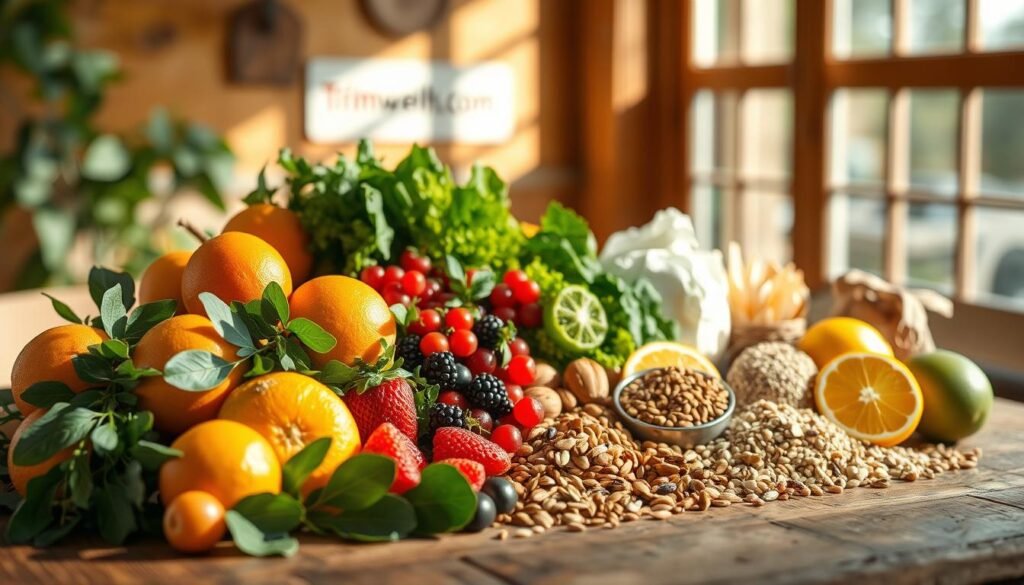
Fruits and veggies are very important. Oranges and lemons are full of vitamin C. Spinach and kale have vitamins A and E, which help your immune system work well. Colorful peppers also have antioxidants and important nutrients.
Don’t forget about proteins that help your immune system. Chicken, fish, and legumes have zinc, which is key for a strong immune system. Nuts and seeds are also good, with vitamin E and healthy fats.
| Food Item | Key Vitamins | Health Benefits |
|---|---|---|
| Oranges | C Vitamin | Boosts immune cells |
| Spinach | A, C, E Vitamins | Enhances immune response |
| Salmon | D Vitamin | Supports immune regulation |
| Almonds | E Vitamin | Antioxidant properties |
| Red Bell Peppers | C Vitamin | Rich in antioxidants |
Eating a variety of these foods makes your immune system stronger. And you get to enjoy tasty and healthy meals.
Conclusion
A good diet full of vitamins is key to keeping us healthy. Eating lots of fruits, veggies, and whole foods is important. This helps us get enough vitamins C, D, and E.
These vitamins help our immune system work well. They also make us feel good overall. But remember, supplements are extra help, not a full meal.
To stay healthy, eat foods rich in vitamins every day. Think about adding supplements if you need to. Good choices in food and life lead to a strong immune system.
FAQ
What are the best vitamins for immune system support?
Vitamins C, D, A, and E are great for your immune system. So are minerals like zinc and selenium. They help fight off infections and keep you healthy.
How do immune-boosting supplements work?
Supplements give you more vitamins and minerals than food. They help your body fight off sickness. This is very helpful during cold and flu seasons.
Are there natural sources for immune health vitamins?
Yes! You can get these vitamins from food. Citrus fruits have Vitamin C, fatty fish have Vitamin D, and leafy greens have Vitamin A. Nuts and seeds have Vitamin E. Eating a variety of these foods helps keep your immune system strong.
What are the benefits of vitamin supplements?
Supplements help your immune system work better. They keep you healthy and prevent deficiencies. They make sure your body gets all the nutrients it needs.
How does Vitamin C support immune function?
Vitamin C fights off inflammation and helps make immune cells. It makes infections shorter and less severe. It’s very important for a strong immune system.
Why is Vitamin D important for immunity?
Vitamin D helps your immune system fight off germs. It’s very important, more so in the winter when it’s harder to get sunlight.
What role does zinc play in immune health?
Zinc helps your immune cells work right. Without enough zinc, your immune system gets weak. This makes you more likely to get sick.
Can lifestyle factors affect immune function?
Yes! What you eat, how much you exercise, how well you sleep, and how you handle stress all matter. A healthy lifestyle helps your vitamins and minerals work better.
Should I rely solely on supplements for immune health?
No, supplements are not enough. You should eat a variety of foods. Use supplements only to fill in the gaps in your diet.
Apple Cider Vinegar Hacks for Better Digestion
The Best Multivitamin for Immune System Support

The Restorative Benefits of Forest Bathing
About The Author
